

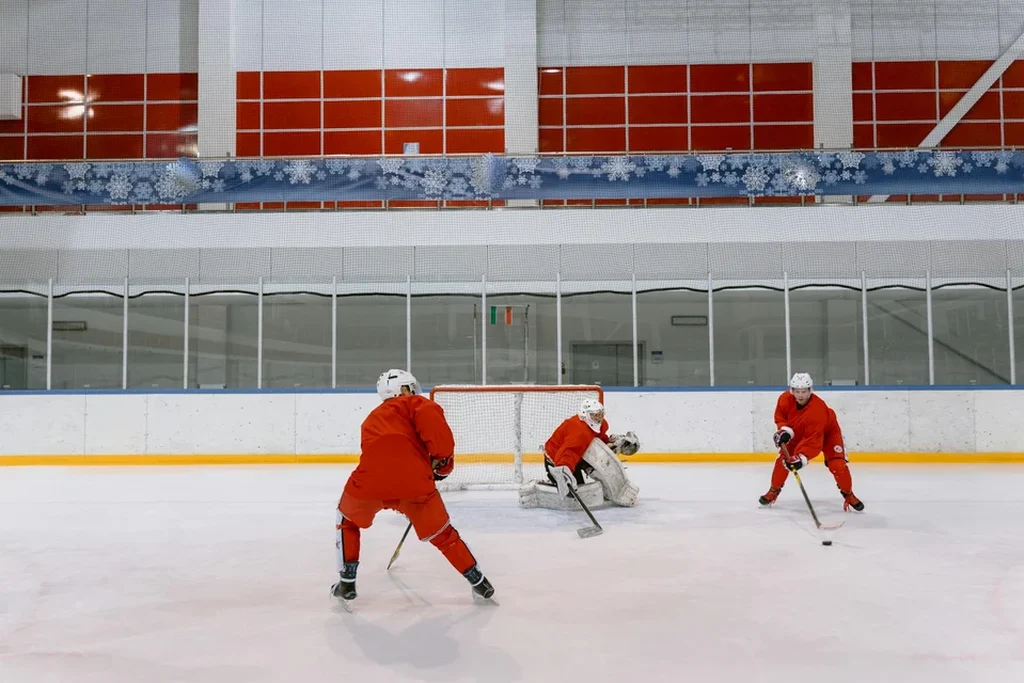
Oilers Power Play Analysis: Key Factors for Success
Let’s be honest, when the Edmonton Oilers power play is humming, it’s a thing of beauty. It’s a well-oiled machine, a strategic masterpiece that can suck the life out of an opponent in a matter of seconds. But when it sputters? The entire fanbase feels the frustration. It’s the difference between cruising to a win and sweating out a one-goal game. With the firepower this team possesses, a struggling man advantage isn't just a minor issue—it's a full-blown crisis that can derail a Stanley Cup run.
So, what separates the historic, record-breaking power plays from the inconsistent, predictable ones? It’s rarely just one thing. It’s a complex system where timing, movement, and mentality all intersect. This guide is a deep dive into the common problems that plague even the most talented units, the symptoms to watch for, and the practical solutions the Oilers can employ to get back to being the most feared special teams group in the National Hockey League.
Problem: Predictable Puck Movement and Stagnant Formation
Symptoms: The power play feels slow. The puck moves exclusively around the perimeter—from defenseman to forward, back to defenseman, over to the other forward. Players are standing still, waiting for a pass. The penalty killers look comfortable, easily anticipating the next play. Shots are coming from low-danger areas, usually from the point, and are easily blocked or seen by the goalie. The crowd at Rogers Place starts to murmur instead of roar.
Causes: This is often a symptom of over-reliance on individual talent. The unit falls into the trap of thinking McDavid or Draisaitl will simply "make a play." Without constant motion, the penalty-killing box doesn’t have to deform or create seams. It can also stem from a lack of practiced, secondary set plays, causing the unit to default to a basic, static setup.
Solution:
- Implement the "Pass to Skate" Rule: Instead of passing to where a teammate is standing, pass to where he is going. This forces both the passer and receiver to be in motion, breaking the static cycle.
- Rotate Positions Mid-Possession: Have McDavid and Draisaitl swap sides occasionally. Have a defenseman pinch down low while a forward rotates to the point. This fluidity confuses penalty killers and opens new lanes.
- Use the Goal Line as a Weapon: More puck movement behind the net, using the back of the cage as a passing tool, can pull defenders out of position and create chaos in front of the crease.
- Prioritize the One-Timer Lane: The threat of a Draisaitl one-timer is immense. The solution isn't just to force it to him, but to use puck movement and player rotation to consistently open that lane, even if the shot doesn’t get taken.
Problem: Failed Zone Entries and Lack of Clean Setup
Symptoms: The Oilers waste 30-45 seconds of their man advantage just trying to get set up in the offensive zone. They struggle to carry the puck in with control, resorting to risky stretch passes or low-percentage dump-ins that the opponent easily retrieves and clears 200 feet. The power play unit looks disjointed and frustrated before they even get a chance to attack.
Causes: Opponents have studied the tape. They know the primary entry plan is to give the puck to McDavid and let him skate through the neutral zone. They deploy a conservative 1-3 forecheck or stack the blue line to deny him speed. Without a reliable "Plan B," the entire sequence breaks down before it starts.
Solution:
- Diversify the Entry Carrier: While McDavid is the best in the world at it, using Draisaitl or a defenseman like Evan Bouchard as the primary entry man on some attempts can catch penalty killers off guard.
- Master the "Drop Pass" Variation: The drop pass isn't inherently bad—it’s predictable. Change the depth of the drop, or have the receiver immediately swing the puck to the far side instead of driving the middle.
- Have a Simple Dump-and-Retrieve Tactic: If the controlled entry is fully blocked, have a designated plan. This could be a soft chip into a specific corner where a forward like Connor Brown, using his speed, is already charging to win the race.
- Practice Under Pressure: Drills in practice should simulate aggressive penalty-killing forechecks at the blue line, forcing the unit to make quick, supportive decisions under duress.
Problem: Overpassing and Reluctance to Shoot
Symptoms:
"SHOOT IT!" You’ve yelled it at your TV. The players look for the perfect, highlight-reel, cross-ice seam pass instead of taking a good shot. They pass up a clear shooting lane from the high slot for a lower-percentage play. This leads to missed opportunities, intercepted passes, and a lack of the simple, greasy rebound goals that define playoff success.
Causes: This is a mentality issue that often affects highly skilled teams. The desire to score the "pretty" goal can override the high-percentage play. There may also be a lack of a designated net-front presence causing players to feel their only option is a perfect shot for a clean goal.
Solution:
- Establish a "Shoot First" Mentality on Certain Plays: The coaching staff, led by Kris Knoblauch, can mandate that the first look off a won faceoff in the offensive zone is a shot on net, just to create havoc.
- Celebrate "Shot-Assists" and Rebounds: Shift the internal praise. A hard shot from the point that creates a rebound and a goal is just as valuable as the primary assist. This reinforces the importance of simply getting pucks through.
- Designate a Net-Front "Bumper" Who Stays Home: This player’s sole job is to screen the goalie, battle for position, and pounce on rebounds. Their consistent presence gives the shooters on the perimeter more confidence to let it fly.
- Use the "One-and-Done" Rule: If a player receives a pass in a shooting lane with a decent look, their first instinct must be to shoot. They can’t stickhandle or look for a second pass.
Problem: Defensive Breakdowns and Shorthanded Chances Against
Symptoms: The most demoralizing event in hockey: a shorthanded goal against. But even the high-danger chances are backbreakers. It often happens when a point shot is blocked, or a risky pass is intercepted at the blue line. Suddenly, the Oilers are caught with three players below the tops of the circles, and an opponent is racing in on Stuart Skinner on a breakaway.
Causes: High-risk plays without a safety net. This includes both defensemen pinching aggressively without forward support, and forwards being too casual with cross-ice passes at the offensive blue line. A lack of assigned defensive responsibility during the power play is also a key factor.
Solution:
- Implement a "High Forward" or "Floater" Role: One forward (often the center on the unit) has the primary responsibility of staying above the puck, ready to act as the last line of defense against a breakout.
- The "No Middle" Rule on Breakouts: When the opponent gains possession, the number one rule is to force them to the wall, never allowing a pass up the middle of the ice, which is the most dangerous shorthanded path.
- Smart Pinching: Defensemen must read the play. If a forward is not in a position to cover for a pinch, the defenseman must retreat. This is a non-negotiable for maintaining defensive integrity.
- Quick Line Changes: If the power play unit is tired after a long shift and the puck is iced, they must get off. A fresh, albeit slightly less talented, unit is far better than a gassed group prone to mistakes.
Problem: Ineffective Net-Front Presence and Second-Chance Opportunities
Symptoms: The goalie sees everything. Shots from the perimeter are easily swallowed up for whistles. There are few, if any, rebounds. Defenders easily box out Oilers players and clear the puck from the crease. The power play scores only on perfect shots, not on the chaotic, hard-working goals that are plentiful in the postseason.
Causes: Placing a skill player in the net-front role who isn't naturally suited for the battle, or a lack of emphasis on the "dirty work" aspects of the power play. It can also be a positioning issue—standing beside the goalie instead of directly in his line of sight.
Solution:
- Commit to a True Net-Front Specialist: This might not be a star player. This is a player whose entire job is to screen, tip pucks, and win battles. Their success is measured in goalie disruptions, not points.
- Practice Tip Drills and Rebound Positioning: Specific practice time dedicated to forwards getting their sticks on point shots and learning where rebounds typically carom to off Skinner or other goalies in practice.
- The "Five Feet" Rule: The net-front player must fight to maintain a position within five feet of the crease at all times. They cannot drift out to the hash marks looking for a pass.
- Traffic on All Shots: Even if the primary screen isn't perfect, a second player should be driving to the net as the shot is taken, looking to pick up any loose change.
Problem: Lack of Adaptability and Counter-Adjustments
Symptoms: The power play starts a game or a series hot, then completely disappears. Opposing coaches make adjustments—aggressive pressure on the half-wall, taking away the one-timer, shadowing McDavid—and the Oilers have no answer. They continue to try the same tactics that are no longer working.
Causes: Being too married to one system or set play. A reluctance to deviate from what has worked in the past, even when the current opponent has clearly found a way to neutralize it.
Solution:
- Develop Multiple Set Plays: Have a primary setup (the 1-3-1), but also have a "B" setup (like an overload or a diamond) that can be switched to mid-game to present a different look.
- Empower the On-Ice Quarterback: Whether it’s McDavid, Draisaitl, or Bouchard, give them the freedom to audible at the line based on what they see from the penalty kill alignment.
- Between-Period Film Sessions: Assistant coaches must be ready with quick, digestible clips at intermission showing exactly how the opponent is defending, and present one or two concrete counter-adjustments.
- Utilize Timeouts Strategically: Use a second-period timeout not just to rest players, but to draw up a specific, adjusted power play look for a critical moment.
Prevention Tips for a Consistently Elite Power Play
Preventing these problems is better than fixing them. Here’s how the Oilers can maintain their elite status:
Practice at Game Speed: Power play practice cannot be a casual shooting gallery. It must replicate game intensity, with coaches acting as aggressive penalty killers.
Constant Film Study: Watch both their own successes/failures and the latest penalty-killing trends around the National Hockey League. What are the top PK units doing?
Mental Toughness Drills: Practice power plays when tired at the end of a hard practice. Simulate the pressure of a must-score situation in the third period.
Rotate Personnel Sparingly: While injuries happen, consistency in unit personnel builds almost telepathic chemistry. Avoid tinkering with the core group unless absolutely necessary.
When to Seek "Professional" Help
In the hockey world, "professional help" means acknowledging when internal solutions aren't working.
A Prolonged Slump: If the power play is below 15% for more than 15-20 games, it’s a systemic issue that requires an external audit.
Postseason Failure: If the power play consistently disappears in the Stanley Cup Playoffs, as we’ve seen in some past runs, it’s time to consult with specialists. This could mean bringing in a retired power play maestro as a consultant in the offseason.
* Personnel Mismatch: If the current roster construction clearly lacks a key element (e.g., a right-shot shooting threat, a net-front beast), it becomes a management issue. The solution then lies in a trade or free agency, areas where the Oilers have made big moves in the past, as detailed in our look at Oilers free agency history and big signings.
Ultimately, the Oilers power play is the engine of their championship aspirations. By diagnosing these common issues, applying practical fixes, and building in preventative measures, they can ensure this weapon remains sharp when it matters most—on the journey through the West and toward the ultimate goal. For the numbers behind the engine’s main driver, check out our deep dive into Connor McDavid’s stats, season by season. Stay tuned to Oilers Insider for all the latest on this evolving story.
Reader Comments (1)