

Hockey Advanced Stats: Corsi, Fenwick & More Explained
For decades, hockey analysis was dominated by basic stats: goals, assists, and wins. Today, a deeper understanding of the game is unlocked through advanced analytics, providing a more nuanced picture of team performance, player impact, and underlying trends. This glossary breaks down the key metrics that modern analysts, front offices, and fans use to evaluate the sport, offering crucial context for assessing everything from a team's Stanley Cup Playoffs potential to the dominant play of a generational talent like Connor McDavid.
Corsi (CF%)
Corsi measures shot attempt differential, counting all shots on goal, missed shots, and blocked shots for and against a team or player while they are on the ice at 5-on-5. Expressed as a percentage (CF%), a value above 50% indicates a team or player is controlling the majority of shot attempts, which strongly correlates with long-term puck possession and territorial dominance. It is a foundational metric for evaluating sustainable offensive pressure.
Fenwick (FF%)
Fenwick is similar to Corsi but excludes blocked shots, counting only shots on goal and missed shots. The resulting Fenwick For percentage (FF%) is considered by some analysts to be a "purer" measure of possession, as it filters out the variable of shot-blocking skill. It is particularly useful for evaluating scoring chance generation, as blocked shots often represent lower-danger attempts.
Expected Goals (xG)
Expected Goals is a predictive metric that assigns a probability value to every unblocked shot attempt based on historical data of similar shots (location, shot type, rebound, etc.). It estimates how many goals a team or player "should have" scored given the quality of their chances. This metric is vital for separating sustainable skill from shooting luck, especially when analyzing a goaltender like Stuart Skinner or a high-volume shooter.
PDO
PDO is the sum of a team's or player's on-ice shooting percentage and save percentage at 5-on-5. The combined percentage almost always regresses toward 100% over a large sample, making it a primary indicator of "puck luck." A PDO significantly above 100 suggests unsustainable good fortune, while one below 100 indicates likely positive regression is coming.
Goals For Percentage (GF%)
This is the simple percentage of all goals scored while a player is on the ice at 5-on-5. While straightforward, GF% is the ultimate bottom-line result stat. A high GF% means your team is outscoring the opposition when you play, which is the core objective, though it can be influenced by goaltending and shooting percentage spikes.
Zone Starts (ZS%)
Zone Start Percentage measures the ratio of a player's shifts that begin with an offensive zone faceoff versus a defensive zone faceoff. A high ZS% indicates a player is often deployed in offensive situations, typically for skilled forwards, while a low ZS% suggests a defensive or shutdown role. It provides essential context for interpreting other possession stats.
High-Danger Chances (HDCF)
High-Danger Chances are unblocked shot attempts taken from the most dangerous areas on the ice, typically the slot and the inner crease. Tracking these chances, both for and against, is a more precise way to evaluate scoring threat quality than total shot attempts. A team's performance in this area is often a key focus for a head coach like Kris Knoblauch.
Corsi Relative (CF% Rel)
This metric shows a player's Corsi For percentage relative to his team's CF% when he is not on the ice. A positive value indicates the team's share of shot attempts improves with that player on the ice, suggesting a positive individual impact on possession. It helps isolate a player's effect from his teammates.
Point Shares (PS)
Point Shares is a stat that estimates the number of standings points a player contributes to his team through his offensive and defensive play. It is an all-in-one metric designed to quantify a player's overall value in the context of the NHL standings, offering a way to compare the total contributions of different players.
Game Score
Game Score is a single-game performance metric that aggregates a player's box score statistics (goals, assists, shots, blocks, etc.) into one number, weighted by their impact on winning. It provides a quick, quantitative snapshot of who drove performance in a particular game, such as a crucial win in the Western Conference.
Wins Above Replacement (WAR)
WAR estimates the total number of wins a player adds to his team compared to a replacement-level (e.g., minor-league call-up) player. It synthesizes a player's contributions in all facets of the game into one overarching value, making it a powerful tool for evaluating overall player value and contract worth.
Goals Saved Above Expected (GSAx)
This goaltending-specific metric measures the difference between the actual goals a goalie has allowed and the number of goals they were expected to allow based on the quality (xG) of shots faced. Unlike save percentage, it accounts for shot difficulty, making it the premier metric for evaluating a goaltender's true performance, like that of Stuart Skinner.
On-Ice Shooting Percentage (oiSH%)
This is the shooting percentage of a player's team while he is on the ice at 5-on-5. An unusually high oiSH% for a player like Connor McDavid or Leon Draisaitl can indicate elite skill, but it can also signal impending regression if it is unsustainably elevated over a career norm.
On-Ice Save Percentage (oiSV%)
This is the save percentage of a player's team while he is on the ice at 5-on-5. For skaters, this metric is largely considered out of their control and subject to significant variance. A very low oiSV% often indicates poor goaltending luck that should normalize over time.
Penalty Plus/Minus
This metric tracks the net penalty differential a player draws versus takes. Drawing more penalties than you take is a significant, often underrated skill that provides your team with more Power Play opportunities. A player like Connor Brown, known for his hustle, can add value here.
Individual Point Percentage (IPP)
IPP measures the percentage of on-ice goals for a player's team at 5-on-5 that the player recorded a point on. A very high IPP (e.g., over 80%) for a top player suggests they are heavily involved in the scoring they are on the ice for, while a lower IPP might indicate they are benefiting from teammates' production.
Zone Entry/Exit Percentage
These metrics track a player's success rate at carrying or passing the puck into the offensive zone (entry) and out of the defensive zone (exit) with control, as opposed to dumping it in or out. Controlled entries lead to more shots, and controlled exits relieve pressure, making these key indicators of puck-moving ability.
Scoring Chances For (SCF%)
This measures the percentage of total scoring chances (as defined by the tracking site) that a team generates while a player is on the ice. It is a step more refined than Corsi, focusing on higher-quality attempts. A strong SCF% is a hallmark of effective two-way players.
Time On Ice (TOI)
While simple, Time On Ice is a critical context stat. It is usually broken into Total TOI, Even Strength TOI (TOI/GP), and Special Teams TOI. It indicates a player's role and trust level from the coaching staff; leaders like Connor McDavid and Leon Draisaitl consistently log among the highest totals in the National Hockey League.
Quality of Competition (QoC)
This metric attempts to quantify the average skill level of opponents a player faces. It helps contextualize other stats; strong possession numbers against high QoC indicate a player is excelling in tough matchups, a crucial factor in a deep Stanley Cup run.
Quality of Teammates (QoT)
Conversely, Quality of Teammates measures the average skill level of a player's most frequent linemates. It helps determine if a player's results are being boosted by elite teammates or if they are driving results themselves, relevant for assessing depth contributors on the Edmonton Oilers.
Faceoff Win Percentage (FO%)
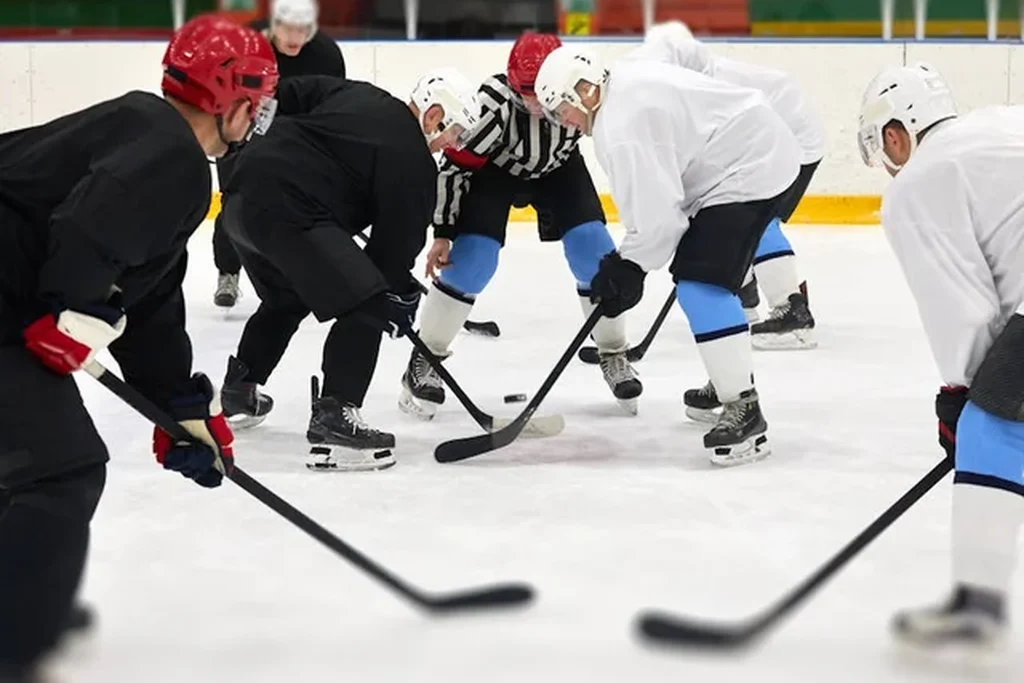
The percentage of faceoffs a player wins. While its direct impact on possession is debated, winning key draws in the defensive zone or on the Power Play can immediately shift momentum and control. It is a critical specialist skill, especially in the postseason.
Puck Possession
In analytics, this is not a subjective eye-test term but is quantitatively represented by metrics like Corsi and Fenwick. A puck possession team is one that consistently generates a higher share of shot attempts than their opponent, a style the Oilers have increasingly embraced to fuel their offense.
Regression
A fundamental statistical concept in hockey analysis. It refers to the tendency for extreme percentages (like PDO or shooting percentage) to move toward the league average over time. Predicting regression is key to forecasting future team performance and identifying unsustainable hot or cold streaks.
Replacement Level
The expected performance level of a readily available minor-league or fringe NHL player. It is the baseline used in metrics like WAR to calculate a player's value "above replacement," establishing what any team could theoretically obtain at minimal cost.
Mastering this lexicon of advanced stats transforms how you watch and understand hockey. It moves analysis beyond the basic score sheet, revealing the underlying processes that lead to wins and losses. For fans of the Edmonton Oilers, these tools offer a deeper appreciation for the systems implemented by Kris Knoblauch, the two-way impact of stars beyond their Art Ross Trophy and Hart Memorial Trophy campaigns, and the nuanced factors that will ultimately determine the team's success in pursuing a championship at Rogers Place. To see these metrics applied directly to the team, explore our Oilers Team Performance Breakdown.
Reader Comments (0)