

Case Study: The 2022 Edmonton Oilers Playoff Run
1. Executive Summary
The 2022 Stanley Cup Playoffs represented a pivotal moment for the Edmonton Oilers, marking their deepest postseason advancement in nearly two decades. This case study examines the strategic, tactical, and performance-based factors that propelled the franchise from a competitive regular season team to a legitimate Western Conference contender. The analysis focuses on the confluence of historic individual offensive production, critical adjustments in team structure and special teams, and the emergence of key supporting roles. While the ultimate goal of a Stanley Cup championship remained unfulfilled, the 2022 playoff run served as a foundational blueprint, demonstrating the high-level execution required to succeed in the modern National Hockey League postseason and setting a new benchmark for organizational expectations.
2. Background / Challenge
Entering the 2021-22 season, the Edmonton Oilers faced mounting pressure to translate regular-season promise into tangible playoff success. The core, led by Connor McDavid and Leon Draisaitl, had established itself as one of the most potent offensive duos in the league. McDavid had just secured his third Art Ross Trophy and second Hart Memorial Trophy as the league’s Most Valuable Player, while Draisaitl remained a perennial scoring title threat. Despite this elite talent, postseason results had been disappointing, with early exits becoming a frustrating pattern. The primary challenge was multifaceted: overcoming a perceived lack of defensive structure and goaltending consistency, developing secondary scoring beyond the top two stars, and proving the team could adapt to the tighter, more physical style of playoff hockey. The narrative surrounding the Oilers was one of unfulfilled potential, and the 2022 postseason presented a critical opportunity to redefine the team’s identity on the national stage.
3. Approach / Strategy
The strategic approach for the 2022 playoff run evolved throughout the season and crystallized under the guidance of then-head coach Jay Woodcroft, who was appointed mid-season. The strategy was built on three core pillars:
- Leveraging Elite Talent: The primary, non-negotiable strategy was to maximize the ice time and offensive opportunities for Connor McDavid and Leon Draisaitl. This involved deploying them on separate lines at even strength to create matchup nightmares for opponents, while uniting them as a nearly unstoppable force on the top Power Play unit. The tactical focus was on providing them with the puck in space and allowing their transcendent skill to dictate play.
- Structural Accountability: Moving beyond a purely run-and-gun style, a renewed emphasis was placed on defensive structure and neutral zone discipline. The system aimed to limit high-danger chances against, support the goaltending tandem of Mike Smith and the emerging Mikko Koskinen, and create turnovers that could quickly transition into offense—a perfect fit for the team’s speed.
- Special Teams Dominance: Recognizing that playoff games are often decided by special teams, the Oilers committed to having the most dangerous man advantage in the league while significantly improving a historically weak penalty kill. The Power Play, operating at a historically high efficiency, was designed as a primary weapon, not just a supplementary tool.
This strategic shift aimed to create a more balanced, resilient team capable of winning games in multiple ways, while still showcasing the offensive fireworks that defined the roster.
4. Implementation Details
The implementation of this strategy was evident in both roster construction and in-game execution throughout the playoffs.
Top-Line Deployment: Connor McDavid centered a line with Evander Kane and Zach Hyman, combining speed, power, and net-front presence. Leon Draisaitl, often playing through a significant injury, centered a second line that provided relentless offensive pressure. This two-pronged attack proved overwhelming for opponents.
Historic Power Play: The first-unit Power Play, featuring McDavid, Draisaitl, Kane, Ryan Nugent-Hopkins, and Tyson Barrie, operated at a staggering 40.0% clip through the first two rounds. Its movement, puck retrieval, and finishing ability were virtually unstoppable, often serving as the series-deciding factor.
Unexpected Secondary Contributions: While the stars shone, critical performances from supporting players were implemented seamlessly. Evander Kane emerged as a pure goal-scorer, leading the playoffs in goals for much of the run. Zach Hyman’s work along the boards and in front of the net created crucial space and scoring chances. Cody Ceci and Darnell Nurse logged massive minutes on the blue line under intense pressure.
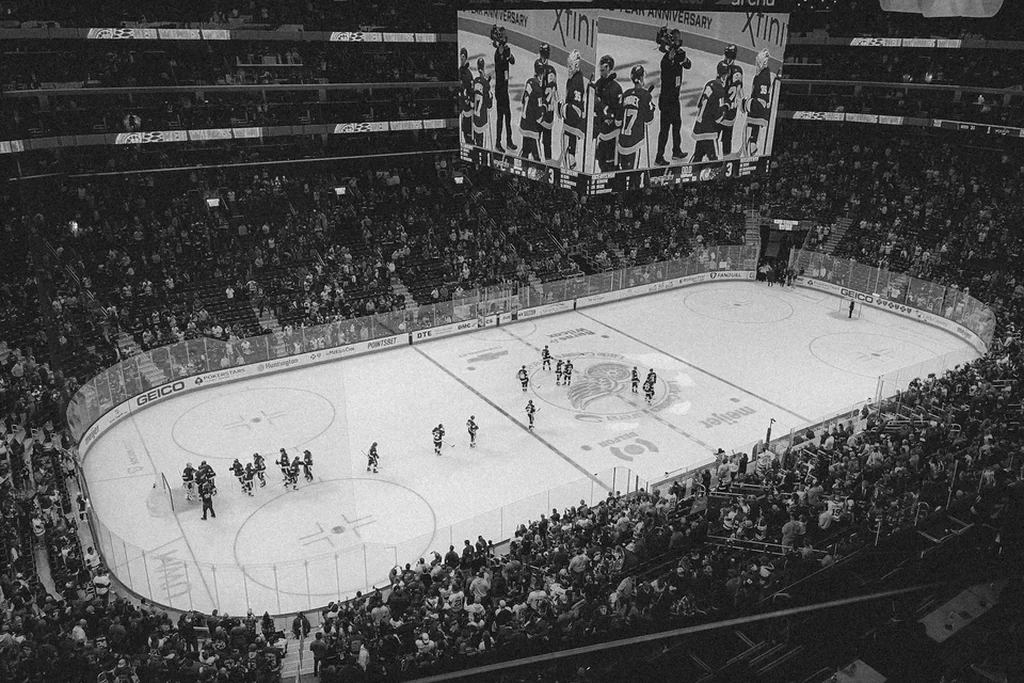
Home-Ice Advantage: The energy at Rogers Place, the Oilers arena, became a tangible asset. The team fed off the home crowd to build momentum and close out key games, turning their home arena into a formidable fortress for visiting teams.
Goaltending Management: The implementation involved riding the hot hand, with veteran Mike Smith providing spectacular, if occasionally unpredictable, goaltending through three rounds. His ability to handle the puck and initiate breakouts was actively incorporated into the team’s transition game.
The coaching staff’s ability to make subtle in-series adjustments, particularly in matchups and defensive zone coverage, showcased a level of tactical preparedness previously questioned.
5. Results
The 2022 playoff run yielded significant, quantifiable results that marked a clear departure from previous postseason disappointments.
Playoff Advancement: The Oilers defeated the Los Angeles Kings in a seven-game first-round series, swept the rival Calgary Flames in the second round in a dominant performance, and advanced to the Western Conference Final for the first time since 2006. They were ultimately defeated in a four-game sweep by the eventual Stanley Cup champion Colorado Avalanche.
Historic Individual Performances:
Connor McDavid recorded 10 goals and 23 assists for 33 points in 16 games, winning the Conn Smythe Trophy as playoff MVP despite his team not reaching the final. He averaged a remarkable 2.06 points per game.
Leon Draisaitl played through a high-ankle sprain to post 7 goals and 25 assists for 32 points in 16 games, including a four-point period in Game 7 against the Kings.
The duo became the first teammates to finish 1-2 in playoff scoring since 1993.
Record-Breaking Special Teams: The Oilers’ Power Play finished the postseason at 34.8% (23-for-66), one of the highest percentages in modern playoff history. Their penalty kill operated at 81.3%, a marked improvement from regular seasons past.
Offensive Output: As a team, Edmonton averaged 4.00 goals per game in the playoffs, leading all postseason teams and demonstrating their implemented offensive strategy was effective at the highest level.
* Cultural Shift: The result was a renewed belief within the organization and fanbase. The run proved the core could lead a team deep into the postseason, changing the external narrative and internal expectations. For more on how the current team builds on this foundation, visit our hub for /oilers-latest-news-stories.
6. Key Takeaways
The 2022 playoff run provided several critical lessons for the Oilers organization and observers of the National Hockey League.
- Elite Talent Can Drive Playoff Success: The postseason disproved the old adage that star power is neutralized in the playoffs. With the right supporting structure, generational talents like Connor McDavid and Leon Draisaitl can not only produce but can single-handedly dominate series and carry a team through multiple rounds.
- Special Teams Are a Series-Deciding Weapon: In the tight-checking environment of the playoffs, a dominant Power Play is not a luxury but a necessity. Edmonton’s ability to score at will with the man advantage was the key differentiator in their series victories over Los Angeles and Calgary. This remains a critical focus for any contender.
- Secondary Scoring is Non-Negotiable: While the stars were historic, the contributions from Evander Kane, Zach Hyman, and others were indispensable. Playoff success requires scoring from multiple lines; reliance on only one or two players is an unsustainable model. This lesson directly influences roster construction, as seen in subsequent moves to add depth. Assessing this depth is crucial for /oilers-fantasy-hockey-draft-checklist.
- Goaltending Must Be “Good Enough”: While Mike Smith was not consistently elite, he provided enough spectacular saves and timely goaltending to win two rounds. The takeaway is that a team with explosive offense does not necessarily require Vezina-caliber goaltending every night, but it does require goaltending that can avoid losing games and steal a few key ones.
- Defensive Structure Enables Offense: The improved commitment to defensive zone coverage and neutral zone play did not stifle the Oilers’ attack; it fueled it. By creating more turnovers and controlled exits, the team actually provided its stars with more puck possession in advantageous situations.
7. Conclusion
The 2022 Edmonton Oilers playoff run stands as a definitive case study in how a team can leverage transcendent individual talent within a refined strategic framework to achieve breakthrough postseason success. It validated the championship potential of the core while clearly outlining the necessary supporting elements—defensive commitment, special teams excellence, and secondary scoring—required to take the final step.
While the sweep in the Western Conference Final exposed remaining gaps in depth and defensive consistency against the league’s absolute best, the run fundamentally altered the trajectory of the franchise. It provided a proven template for playoff hockey in Edmonton, raised the standard of performance, and solidified Rogers Place as a feared postseason venue. The experience gained became an invaluable asset for the core players and the organization as a whole, setting the stage for the continued pursuit of the ultimate goal. The lessons in roster building, tactical adjustment, and peak performance management continue to resonate as the Oilers navigate each new postseason opportunity. For fans looking to follow every step of this ongoing journey, ensuring reliable access is key; find solutions for common /troubleshooting-oilers-game-streaming-issues.
Reader Comments (1)